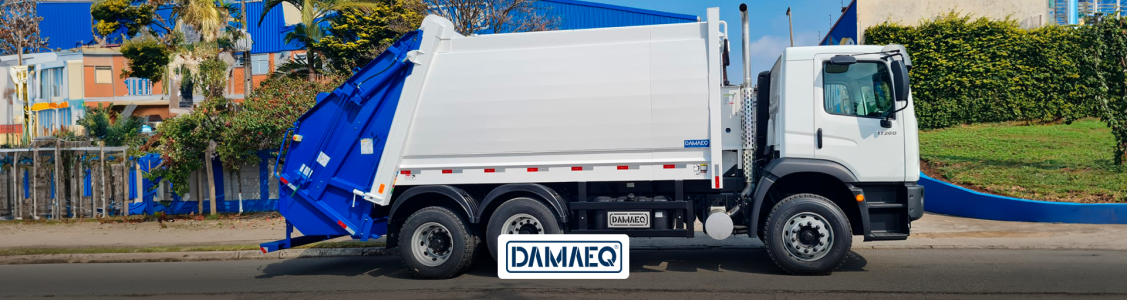
Refuse collection trucks are fundamental to the proper functioning of urban centers and face intense routines and challenging environments that demand not only performance, but also strength and durability.
In this article, we look at how these road implements are designed specifically to withstand daily wear and reduce maintenance costs. Check it out below!
Strength and durability: designs that handle the intense pace of collection
The work cycle of refuse collection trucks is exhausting: constant braking, frequent starts, narrow streets, uneven terrain and continuous exposure to organic and chemical waste. For this reason, when buying compactor trucks, it is important that they are made of highly resistant materials, such as structural steel with high mechanical and corrosion resistance.
For example, compactor bodies use reinforced plates and high-penetration welds to withstand constant impact and abrasion.
In addition, articulation points and hydraulic arms are built with hardened steel pins and self-lubricating bushings, increasing component service life.
Special treatments against corrosion and oxidation
Because of direct contact with organic waste and leachate, garbage trucks are commonly exposed to highly corrosive environments. To address this challenge, modern road implements receive a series of anti-corrosion treatments, such as:
- Electrostatic painting: ensures greater adhesion and uniform coverage, protecting the surface against chemical agents and moisture.
- Hot-dip galvanizing: increases the durability of metal components, creating a protective layer against oxidation.
- Epoxy coatings: used mainly on the inner areas of the body, they offer a high level of chemical resistance, preventing leaks and premature deterioration.
These treatments extend the implement’s service life and reduce the frequency and cost of corrective maintenance.
High-performance, low-maintenance-cost hydraulic systems
In the most modern refuse collection trucks, hydraulic systems are equipped with safety valves, high-efficiency filters and reinforced hoses.
In addition, there is a growing trend toward modular hydraulic systems, which make preventive maintenance and component replacement easier without having to dismantle the entire implement. This modularity represents significant savings in maintenance time and cost, while also keeping fleet operations more efficient.
Easy cleaning and preventive maintenance
How easy implements are to clean also directly affects the durability of refuse collection trucks.
When buying the latest road implements, they are already designed with rounded corners, built-in drains and sloped surfaces that prevent waste buildup.
Today, many road implement manufacturers incorporate wear indicators, easy-access lubrication points and remote monitoring sensors that warn of failures.
This preventive approach, combined with smart design, allows maintenance teams to act with more precision and less urgency.
Operational efficiency and lower fuel consumption
Although the main focus is strength and maintenance, high-performance road implements also contribute to the operational efficiency of collection trucks.
This is because the weight of the implements directly affects fuel consumption. Lighter yet resistant materials, such as advanced metal alloys and thinner high-strength steels, help reduce the vehicle’s total weight without compromising robustness.
Get to know Damaeq
Damaeq, as a manufacturer of road implements, such as solid waste collection trucks, offers high-quality solutions to meet the specific needs of each sector, ensuring that your operations are more efficient, sustainable and safe.
Acquiring road implements is a smart choice for companies and sectors that want to optimize their processes and ensure a cleaner, safer work environment.
👉Want to learn more about Damaeq solutions? Get in touch with our consultants right now! 📞+ 55 (41) 3643-2232