
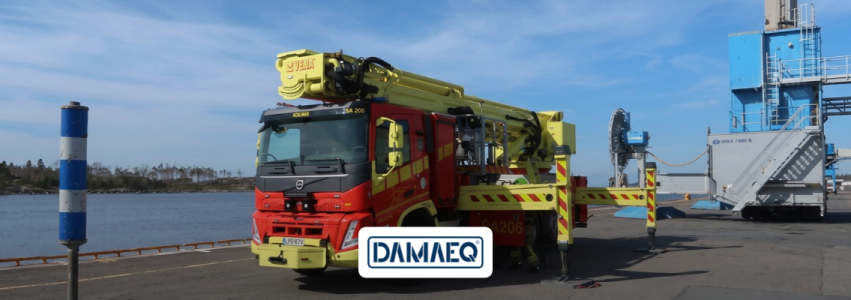
Knowing when it is worth investing in aerial platforms for firefighting is an important decision for fire departments looking to expand their operational capacity and increase safety in complex incidents. This equipment can make it easier to reach elevated locations, support firefighting efforts and contribute to rescue operations in buildings and hard-to-reach structures.
However, the investment must take into account the types of incidents attended, the available infrastructure and the specific needs of the fire department. Assessing these factors helps identify the situations in which an aerial platform can be a strategic resource for emergency crews.
When is it worth investing in aerial platforms for firefighting?
Investing in aerial platforms can be especially relevant for fire departments that serve areas with tall buildings, industrial zones, large commercial structures or facilities that pose access challenges during emergencies.
In these scenarios, the equipment can expand the options for positioning crews, provided it suits the application and the conditions of each operation.
Some situations that justify evaluating this acquisition include:
- Frequent calls to tall buildings: when incidents require access to upper floors and facades.
- High-angle rescues: when people need to be reached in hard-to-access locations.
- Fires in industrial facilities: when structures, equipment and elevated areas call for specific means of approach.
- Operations in complex urban areas: when access to buildings presents obstacles or operational limitations.
- Expanding response capacity: when the current fleet does not adequately meet the needs identified in operational planning.
The frequency of these scenarios is one of the factors that help determine whether the acquisition is a priority for the fire department.
Fires in tall buildings and complex structures
One of the main scenarios in which it is worth investing in aerial platforms for firefighting is responding to incidents in tall buildings. In these environments, access to certain floors and exterior points can be hindered by height, architecture and obstacles.
Aerial platforms can provide an elevated position to support crew work, depending on the equipment configuration and the operating procedures adopted.
They can also contribute to reconnaissance, rescue and firefighting actions at locations previously defined by the team in charge of the incident.
Access to hard-to-reach areas
Facades, rooftops and elevated structures may require resources that complement the department’s conventional equipment. The right platform can expand access options, as long as it respects the reach, load and stability limits set by the manufacturer.
It is important to remember that maximum working height alone does not determine whether the equipment is suitable. Horizontal reach, ground conditions and the space available for stabilization must also be analyzed.
High-angle rescues and support for emergency crews
Another important scenario involves rescue operations at elevated locations. People trapped on rooftops, industrial structures or restricted-access points may require specific resources for approach and safe extraction.
In these situations, aerial platforms suited to the operation can make it easier for professionals to reach the location and complement the rescue procedures defined by the fire department.
Use of the equipment must take into account load capacity, the permitted number of occupants, environmental conditions and the applicable safety protocols.
More resources for different types of incidents
Besides fires and rescues, certain platforms can be used for inspections and other operational activities at height, according to their purpose and technical specifications. This versatility can be considered when planning the acquisition, provided the intended uses are compatible with the equipment’s design.
How to assess whether the investment pays off for the fire department
To decide whether it is worth investing in aerial platforms for firefighting, it is advisable to analyze operational and financial data. The decision should be based on concrete needs, not merely on the availability of a new technology.
The main criteria include the frequency of incidents at height, the profile of the buildings served, the limitations of the current fleet, acquisition and maintenance costs, and the need to train operators.
It is also important to check whether the local infrastructure allows the equipment to be used safely, considering access roads, space for positioning and stabilization, ground conditions and nearby obstacles.
Indicators that support the decision
The fire department can use indicators to identify operational gaps and justify the acquisition of specialized equipment.
| Evaluation criterion | What to assess |
| Incident frequency | Number and type of calls that require access at height |
| Regional profile | Presence of tall buildings, industrial plants and large structures |
| Fleet limitations | Difficulties faced with the resources available |
| Required reach | Working height and horizontal reach required |
| Total cost | Acquisition, maintenance, training and operation |
| Infrastructure | Space for access, positioning and stabilization |
| Training | Availability of trained operators and suitable procedures |
Analyzing these factors together makes it possible to compare the investment with the department’s real needs and set fleet modernization priorities.
What to look for before acquiring an aerial platform
The choice must consider the intended application and the technical specifications of each model. Not every platform is designed for the same purpose, and equipment built for work at height is not automatically suitable for firefighting.
Before acquiring a solution, it is essential to verify that the equipment has the appropriate design, configuration, accessories and certifications for the intended activity.
The main aspects to assess are:
- Working height and horizontal reach: must match the locations that need to be reached.
- Load capacity: must support the expected weight of people, tools and authorized accessories.
- Stability and stabilization: must be compatible with the operating conditions.
- Mobility: the vehicle must be able to reach the planned response locations.
- Safety systems: must meet the requirements applicable to the equipment and its use.
- Maintenance and technical support: it is important to consider the availability of service, parts and specialized services.
A technical evaluation with qualified professionals helps avoid acquiring a solution that does not meet the demands of the operation.
Maintenance and training: factors that influence the investment
The purchase decision should not consider only the initial price. Maintenance costs, equipment availability and crew training directly affect long-term planning.
Periodic inspections, preventive maintenance and compliance with the manufacturer’s recommendations are essential to preserve operating condition. Training also helps professionals understand the equipment’s limits, stabilization procedures and the care required during use.
Therefore, when assessing when it is worth investing in aerial platforms for firefighting, the fire department should consider the total cost of ownership, including acquisition, operation, maintenance and training.
Read more:
- Road implements for firefighting: learn how this equipment improves agility in operations
- Fire truck with multi-purpose tank: versatility for civil defense and emergency operations
DAMAEQ: solutions to expand the operational capacity of fire departments
DAMAEQ develops, manufactures and sells firefighting equipment for public agencies, fire departments and government institutions. With 100% Brazilian manufacturing, it offers solutions for different operational needs, including incidents that require access to elevated locations, rescues and support for emergency crews.
Located in Araucária (PR), the company has an 8,000 m² facility and the capacity to produce up to 30 road implements per month. Damaeq also offers training, maintenance services, the possibility of certifying technical assistance in the customer’s region, and a factory warranty.
When assessing when it is worth investing in aerial platforms for firefighting, it is essential to consider the profile of the incidents, the fire department’s needs and the technical requirements of the operation.
Get in touch with Damaeq to talk to our team and learn about the solutions available to support the modernization of your fleet.
FAQ – Frequently Asked Questions
1. When does a fire department need to invest in new equipment?
Acquisition should be considered when existing equipment does not adequately meet operational needs, especially in frequent incidents that require specialized resources. Damaeq can guide fire departments in evaluating firefighting solutions according to the characteristics of each application.
2. What factors influence the choice of an aerial platform?
Working height, horizontal reach, load capacity, stability, ground conditions and intended use are essential factors. Damaeq can help identify the project’s needs and evaluate equipment suited to the operation.
3. Are aerial platforms useful in fires in tall buildings?
They can be useful when the equipment is designed and configured for the application, providing access to certain elevated points and support for emergency crews. Damaeq works with firefighting solutions and can advise the fire department on the options available for its needs.
4. What should be considered besides price when buying fire department equipment?
It is important to assess maintenance costs, training, availability of technical assistance, warranty and operating conditions. Damaeq offers training, maintenance services and a factory warranty, according to the conditions that apply to the equipment.
5. How do you keep an aerial platform ready for emergencies?
Readiness requires inspections, preventive maintenance, operator training and compliance with the manufacturer’s guidelines. Damaeq offers maintenance and training services to support customers in the upkeep and proper use of their equipment.
6. Where can I find solutions to modernize a firefighting fleet?
Damaeq develops and manufactures equipment to meet the needs of public agencies and fire departments. Contact the company to present the demands of your operation, clarify technical questions and evaluate the solutions available.
