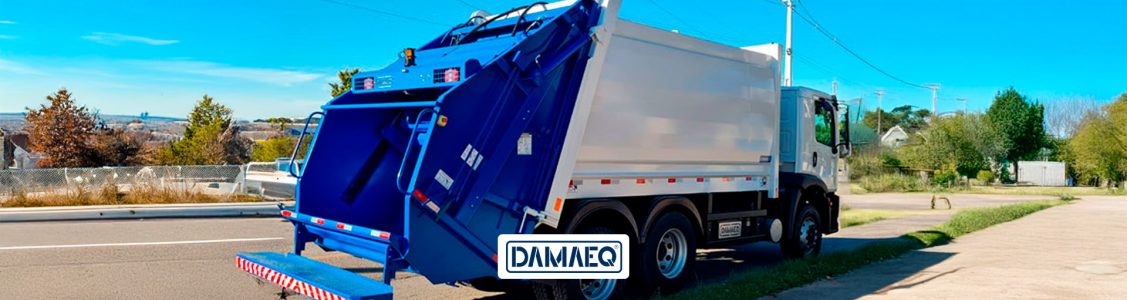
The history of garbage collection in Brazil is marked by significant advances over time and reflects the country’s social, economic and technological changes.
In this article, we list the main advances of this road implement, so important to urban cleaning. Keep reading!
The evolution of garbage collection in Brazil: from limited solutions to technological efficiency
First of all, garbage collection in Brazil went through a long process of evolution, reflecting both urban growth and the technological advances the country experienced.
Below, we outline how this evolution unfolded, divided into important milestones over the decades.
Timeline of garbage collection equipment in Brazil
- Garbage collection in the early decades: carts and manual handling
During the colonial period and the first years of the Republic, garbage collection in Brazil was extremely limited. Brazilian cities, for the most part, did not have adequate infrastructure for waste management. In many cases, household garbage was put out and removed by hand or with carts pulled by animals such as oxen and horses. Collection was a hard task, carried out by workers who walked the streets carrying large amounts of garbage.
- The 20th century: the beginning of modernization
Above all, with the urbanization of Brazilian cities, garbage collection came to be seen as a problem to be solved more efficiently. In addition, population growth and the expansion of urban areas called for more effective and structured solutions.
During the 1930s and 1940s, cities began to adopt new collection methods, with the introduction of the first mechanical bodies and trucks adapted for waste collection.
The model still relied heavily on manual labor, but the introduction of trucks helped reduce the time needed to pick up garbage and increased waste transport capacity.
- The 1960s: professionalization and infrastructure development
In the 1960s, Brazil went through a period of industrialization and greater investment in infrastructure. As a result, garbage collection began to be recognized as an essential service for quality of life in cities. The professionalization of the sector brought important innovations, such as fixed routes for garbage collection trucks and the creation of public services dedicated to waste management.
In addition, the need for public policies focused on proper environmental handling of garbage began to be recognized, such as the creation of sanitary landfills and the search for methods to minimize the environmental impacts of final waste disposal. Cities came to have a more organized collection system, with fixed schedules and greater oversight.
- The technological revolution: modern trucks and cutting-edge technologies
Today, garbage collection is carried out much more efficiently and with cutting-edge technology. Road implements for urban cleaning have been modernized and adapted to different types of waste, allowing garbage to be collected faster and more safely. In addition, with advances in automation, this service is performed with greater efficiency, reducing environmental impact and improving the working conditions of the professionals involved.
Today’s garbage collection trucks are equipped with compaction systems, which make it possible to carry larger amounts of waste in fewer trips. Another significant advance is the adoption of waste separation technologies, such as systems that help sort recyclable garbage, contributing to environmental preservation.
- The role of road implement companies: innovations that transform garbage collection
Companies that manufacture road implements, play a fundamental role in the evolution of garbage collection in Brazil. These implements are key pieces for the modernization and efficiency of collection systems, allowing waste to be transported and compacted more safely and effectively.
👉See also: Efficiency in garbage collection: discover tips and practices to improve your services
Get to know Damaeq
Damaeq, which specializes in manufacturing road implements, offers innovative solutions that meet the needs of the garbage collection sector.
With a range of refuse collectors (compactors), we contribute to the continuous advancement of collection infrastructure in Brazil, bringing technological solutions that aim not only to increase operational efficiency but also to reduce environmental impact.
👉Want to learn more about Damaeq management solutions? Get in touch with our consultants right now! 📞+ 55 (41) 3643-2232