Making a comparison between cleaning equipment is a strategic decision that directly affects the quality of the services provided, operating costs and the sustainability of operations.
In this article, we present the main factors to consider when selecting public cleaning equipment, focusing on cost, efficiency and maintenance. Keep reading!
Why choosing the right equipment is so important
Buying suitable road implements ensures higher productivity, lower long-term costs and better working conditions for cleaning crews. They also help protect the environment, especially if the choice takes more sustainable models into account, with lower fuel or energy consumption.
Main factors to consider when comparing equipment
Acquisition and operating cost
The initial investment should not be the only point analyzed. It is essential to evaluate the total cost of ownership (TCO), which includes maintenance, fuel or energy consumption, service life and parts availability.
Important aspects:
- Value of the road implement.
- Recurring fuel or electricity costs.
- Cost and frequency of preventive and corrective maintenance.
- Ease of sourcing and price of spare parts.
- Financing, rental or leasing options.
Operational efficiency
Efficiency is the equipment’s ability to perform the job with quality and speed, reducing the need for manual effort.
Points to watch:
- Square meters cleaned per hour.
- Agility of movement in urban areas.
- Noise level (important in residential areas).
- Ability to operate on different types of floor or terrain.
- Ease of operation and operator comfort.
Maintenance and technical support
Equipment with complex maintenance or hard-to-find parts can cause downtime and unexpected costs.
Criteria to evaluate:
- Maintenance frequency recommended by the manufacturer.
- Average repair time in case of failure.
- Availability of parts in the domestic market.
- Availability of specialized technical assistance in your region.
- Training required for the local technical team.
Comparison between types of public cleaning equipment
Below, we compare the most common road implements used in urban cleaning, taking into account cost, efficiency and maintenance:
Mechanical sweeper
- Cost: High initial investment.
- Efficiency: High, especially on large avenues and wide urban areas.
- Maintenance: Medium to high, requires specific care and frequent servicing.
- Ideal for: Major roads, wide streets, busy urban centers.
Gasoline blower
- Cost: Low investment.
- Efficiency: Medium, ideal for areas with accumulated leaves and light debris.
- Maintenance: Low, as long as it is used correctly.
- Ideal for: Sidewalks, squares and tree-lined parks.
High-pressure washer
- Cost: Medium, with good cost-benefit options.
- Efficiency: High on tough dirt, such as greasy floors or graffiti.
- Maintenance: Medium, requires servicing of pumps and hoses.
- Ideal for: Monuments, squares, open-air markets and historic centers.
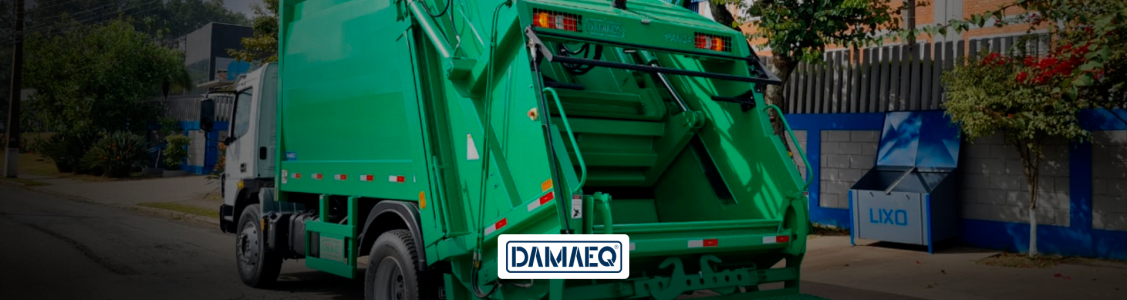
Refuse collector truck (compactor)
- Cost: Very high, being one of the largest investments in urban cleaning.
- Efficiency: Extremely high, ideal for collecting large volumes of waste.
- Maintenance: High, with a need for specialized technical support.
- Ideal for: Household, industrial and hospital waste collection.
Manual sweeping cart
- Cost: Very low, easy to acquire in large quantities.
- Efficiency: Low, suitable for smaller and hard-to-reach areas.
- Maintenance: Practically none.
- Ideal for: Sidewalks, alleys and areas with heavy pedestrian traffic.
Other relevant considerations
In addition to cost, efficiency and maintenance, it is essential to consider other aspects when making the decision:
Sustainability and environmental impact
- Electric or hybrid road implements reduce pollutant emissions and noise levels.
- More sustainable options help in obtaining environmental certifications.
Team training
- Modern models may require specific training.
- Assess how familiar the operators are with the on-board technology.
Flexibility and versatility
- Multifunctional equipment, or equipment with interchangeable attachments, offers a greater return on investment.
- Ideal for cities with different types of roads and cleaning needs.
Parts and support logistics
- Give preference to brands of road implements with technical support nearby and easy access to parts.
- This reduces downtime and avoids operational losses.
See also: New National Guidelines Law for Basic Sanitation: learn its guidelines and its importance
Get to know Damaeq
Damaeq, as a manufacturer of road implements, offers high-quality solutions to meet the specific needs of each sector, ensuring that your operations are more efficient and sustainable.
Acquiring road implements is a smart choice for companies and sectors looking to optimize their processes and ensure a cleaner, safer work environment.
Want to learn more about Damaeq solutions? Contact our consultants right now! + 55 (41) 3643-2232