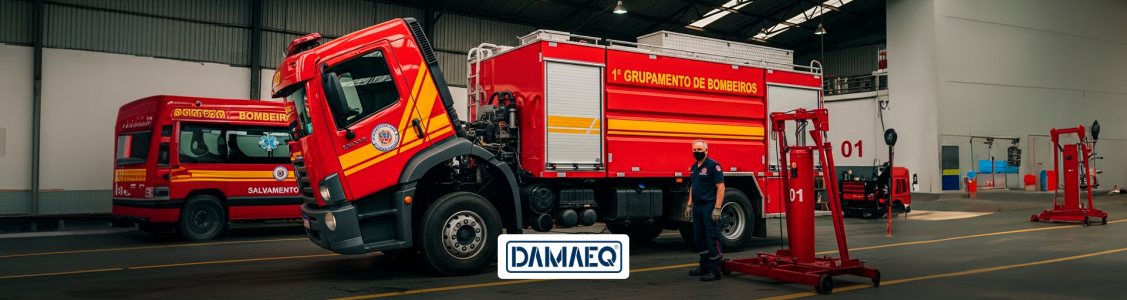
Carrying out fire truck maintenance is a decisive factor in ensuring that every emergency response is carried out safely, efficiently and quickly.
In this article, we discuss the importance of preventive maintenance for implements, explaining how to avoid failures during critical incidents and how to optimize the service life of firefighting vehicles. Keep reading!
The importance of preventive maintenance on fire trucks
Preventive maintenance of road implements goes far beyond simply fixing failures. It works strategically, anticipating problems before they become critical during an incident.
Road implements such as fire trucks operate under severe conditions, with high temperatures, constant pressure in hydraulic systems and long periods of inactivity followed by intense use.
When well planned, preventive maintenance delivers clear benefits:
- Fewer unexpected failures during emergencies
- Greater operational availability of the fleet
- Longer service life for implements and chassis
- Lower corrective maintenance costs
- More safety for operators
Pumping and firefighting systems
Pumping systems are the heart of vehicles such as the ABS Fire Truck, ABT and AT BM. High-pressure pumps, valves, hoses and connections must be in perfect condition to ensure adequate flow and an immediate response.
Some essential practices include:
- Periodic inspection of centrifugal and positive-displacement pumps
- Checking for leaks in connections and hoses
- Regular pressure and flow tests
- Internal cleaning to prevent buildup of residue
Neglecting these precautions can result in pressure loss or total system failure at the most critical moment.
Caring for water and foam tanks
In models such as TMA, ABT and ABTR, tanks are key components. Proper maintenance prevents contamination, corrosion and leaks that compromise firefighting efficiency.
It is recommended to:
- Clean the tanks periodically
- Inspect internal linings
- Check level sensors and drain valves
- Ensure the lids are properly sealed
These precautions preserve the quality of the water or foam and prevent structural damage to the implement.
Maintenance of the electrical and electronic system
Modern fire trucks have complex electrical systems, including control panels, emergency lighting, sirens and sensors. In vehicles such as the Auto Resgate (AR) and the Auto Salvamento (AS), electrical reliability is indispensable.
An efficient electrical maintenance routine involves:
- Checking batteries and alternators
- Inspecting wiring harnesses and connections
- Testing emergency lighting and signaling
- Updating and calibrating electronic panels
Electrical failures can prevent essential equipment from working, directly affecting the emergency response.
Chassis, suspension and braking system
The heavy weight of road implements and the need for fast response call for extra attention to the chassis and safety systems. Fire truck maintenance must take into account the severe use of these components.
Critical points include:
- Inspection of the suspension and shock absorbers
- Checking the brake system and brake pad wear
- Periodic wheel alignment and balancing
- Structural assessment of the chassis to identify cracks or deformation
These precautions ensure stability, handling and safety in highly demanding operations.
Rescue implements and hydraulic tools
Vehicles such as the ABTR and the AR carry rescue equipment, such as extrication tools, winches and hydraulic tools. Preventive maintenance of these items is just as important as that of the truck itself.
Good practices include:
- Regular functional tests of the equipment
- Proper lubrication of moving parts
- Correct storage to prevent damage
- Preventive replacement of hydraulic hoses and connections
Well-maintained tools reduce response time and increase crew efficiency in complex rescues.
Maintenance planning and record keeping
One of the pillars of extending vehicle service life is strict control of the maintenance performed. Creating a preventive maintenance plan makes it possible to standardize procedures and avoid oversights.
Keeping detailed records helps to:
- Identify wear patterns
- Schedule replacements before failures occur
- Comply with technical and operational standards
- Preserve the vehicle’s value over time
Fire truck maintenance should be seen as a strategic investment, capable of ensuring reliable performance, operational safety and longer vehicle service life in every emergency situation.
👉See also: Cargo transport safety with road implements: learn how it can be improved
Damaeq: a road implements specialist
Damaeq, as a manufacturer of road implements such as fire trucks, offers high-quality solutions to meet the specific needs of each sector, ensuring that your operations are more efficient, sustainable and safe.
Acquiring road implements is a smart choice for companies and sectors looking to optimize their processes and ensure a cleaner, safer work environment.👉Want to learn more about Damaeq solutions? Contact our consultants right now! 📞+ 55 (41) 3643-2232