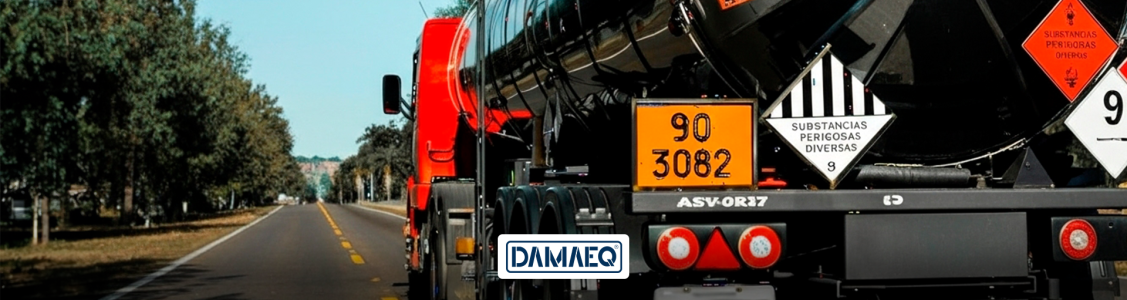
Road implements for hazardous products play an essential role in the safe logistics of cargo that poses risks to health, the environment and people’s physical safety.
In this article, we cover the safety laws for transporting hazardous products and how road implements must be properly adapted to meet legal requirements. Keep reading!
Legislation on the transport of hazardous products in Brazil
The transport of hazardous products in Brazil is regulated by several laws, resolutions and technical standards, and ANTT Resolution No. 5,947/2021 is currently one of the most relevant. It sets rules on documentation, signage, packaging, equipment and training.
The legislation follows international standards, such as the UN Orange Book, which classifies products into nine hazard classes. This standardization facilitates control and inspection at the national and international levels. Besides ANTT, bodies such as IBAMA, the Federal Highway Police and state agencies also take part in inspecting the sector.
Legal requirements and necessary adaptations in road implements
To meet legal requirements, road implements for hazardous products must be designed and adapted with technologies that ensure maximum safety during transport. The main requirements include:
Proper signage
Vehicles must display safety panels and visible hazard labels, according to the class of the substance carried. This signage must comply with the standardized UN model and be weather-resistant and easy to read.
Reinforced structure and leak containment
Implements such as tank trucks, refuse collectors and sweepers that carry hazardous waste must have leak containment systems, sealed compartments and chemical-corrosion-resistant materials. This prevents the risk of environmental contamination and protects drivers and the surrounding population.
On-board emergency equipment
The legislation requires vehicles to be equipped with emergency kits, including fire extinguishers, wheel chocks, flashlights, signaling cones and Personal Protective Equipment (PPE) for the driver and assistant.
Rigorous maintenance and traceability
When buying road implements for transporting hazardous products, this equipment must undergo periodic inspections, with maintenance records available to the inspection authorities. In addition, installing GPS tracking systems allows real-time monitoring of the cargo, providing greater logistics safety.
Types of road implements used
Companies that transport hazardous products need to invest in specialized road implements designed to handle different types of cargo and risks. Below, we list some common models and their applications:
Refuse collection trucks
Refuse collection trucks used for hazardous industrial or hospital waste must have internal compartments that prevent leaks, the spread of odors or direct contact with toxic materials. Proper sealing and the use of automated loading and unloading systems help reduce contamination risks.
Mechanical sweepers
In industrial settings or on roads where chemicals or flammables have spilled, mechanical sweepers are essential. They must be adapted with filters and waste compartments suited to handling hazardous materials, preventing toxic or flammable dust from dispersing into the air.
Fire trucks
Although they are not implements for the direct transport of hazardous products, fire trucks are essential for controlling accidents involving this type of cargo. They must be equipped with chemical foam systems, pressurized water and rescue equipment to deal with fires caused by flammable substances or dangerous chemical reactions.
Furniture machinery
In the furniture sector, the use of flammable solvents, paints and varnishes calls for special care. Furniture machinery, when transported or used in places where hazardous products are handled, must comply with electrical and environmental safety standards, with compatible exhaust systems and chemical waste storage.
Responsibilities of the carrier and the shipper
Brazilian law establishes that both the carrier and the shipper have responsibilities in the transport of hazardous products.
Shipper:
- Provide accurate information about the type of substance being transported.
- Inform the characteristics, risks and precautions required for handling the cargo.
Carrier:
- Ensure that the road implements are properly prepared for transport.
- Ensure that drivers are trained to handle hazardous products.
- Verify that the cargo is properly packaged and safe for transport.
Why choose certified road implements
Purchasing road implements for hazardous products from specialized companies that strictly follow technical standards is an essential investment for carriers and industries. Equipment certification and approval ensure that vehicles meet all legal and operational requirements, reducing the risk of accidents, fines and environmental impacts.
Get to know Damaeq
Damaeq offers high-quality road implements for hazardous products, ensuring that your operations are more efficient, sustainable and safe.
Buying our products is a smart choice for companies and sectors that want to optimize their processes and ensure a cleaner, safer work environment.👉Want to learn more about Damaeq solutions? Get in touch with our consultants right now. 📞+ 55 (41) 3643-2232