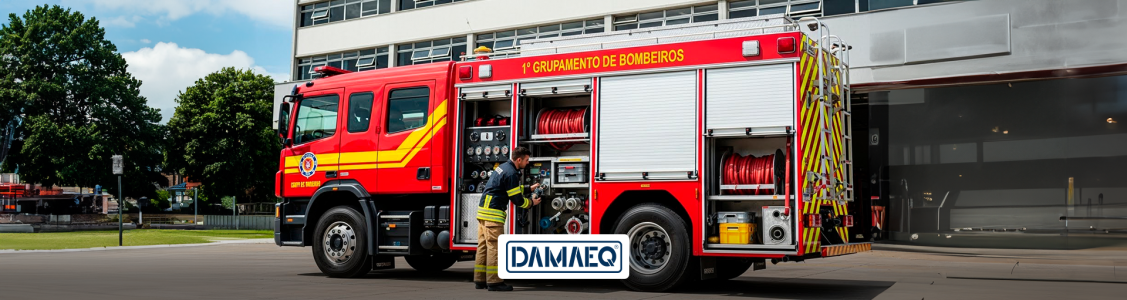
Operational safety with fire trucks is a decisive factor in the efficiency of firefighting, rescue and emergency response operations.
In this article, we discuss the importance of the main operating procedures that help reduce risks, protect lives and preserve equipment during critical responses. Check it out below!
The importance of operational safety in emergency operations
Fire trucks operate in unpredictable environments, such as urban and forest fires, road accidents and industrial disasters.
In these situations, mechanical failures, operating errors or the absence of clear protocols can put both the professionals and the people being assisted at risk.
Operational safety with fire trucks seeks to minimize these risks through standardized practices, preventive maintenance and the correct use of on-board systems.
Procedures before an emergency response
After you buy a fire truck, proper preparation begins even before the emergency call. The routine of inspecting and checking the trucks is essential to ensure that all systems are working correctly.
Some fundamental procedures include:
- Daily check of brakes, tires, suspension and steering systems
- Checking water, foam, fuel and hydraulic fluid levels
- Testing the lighting, audible signaling and communication systems
- Inspecting hoses, pumps, ladders and firefighting equipment
These preventive actions significantly reduce the likelihood of failures during travel or at the scene, directly contributing to operational safety with fire trucks.
Safe driving while en route
The trip to the emergency scene is one of the most critical moments of the operation. Improper use of sirens and lights, excessive speed or disregard for road conditions can result in serious accidents.
To increase safety while en route, it is essential to:
- Respect the vehicle’s operating limits, even in urgent situations
- Maintain constant communication between the driver and the team
- Anticipate maneuvers and take into account the total weight of the loaded truck
- Adjust driving to traffic, weather and visibility
Fire trucks designed with a focus on safety feature advanced braking systems, stability control and ergonomic cabs, which help the operator maintain full control of the vehicle.
Safety in positioning and operating at the scene
Upon arriving at the scene, correct positioning of the truck is essential to protect the team and ensure the efficiency of the operation. A poorly positioned vehicle can hinder access, compromise stability or expose firefighters to additional risks.
Good practices include:
- Assessing the terrain before parking, avoiding unstable areas
- Positioning the truck so as to protect the team from traffic
- Using wheel chocks and stabilizers when available
- Keeping a safe distance from structures at risk of collapse
Operational safety with fire trucks also depends on the correct use of pumps, hoses and lifting systems, always following the manufacturer’s specifications.
Integration between equipment and crew
Operational efficiency is directly linked to the integration between the truck’s equipment and the crew’s training. Systems that are poorly understood or used incorrectly can cause delays or accidents.
For this reason, it is essential that operators:
- Know the vehicle’s controls and functions in depth
- Carry out periodic training with the on-board equipment
- Follow standardized protocols for each type of response
Companies specialized in firefighting equipment invest in designs that make compartments easier to access, improve ergonomics and reduce physical effort, contributing to safer operations.
Preventive maintenance as a pillar of safety
Preventive maintenance of fire trucks is one of the pillars of operational safety with fire trucks. Emergency vehicles are subject to intense wear, which calls for rigorous inspection and servicing plans.
The main points of care include:
- Periodic servicing of the pumping system
- Structural inspection of the chassis and body
- Updating electrical and electronic components
- Preventive replacement of critical parts
Keeping trucks in perfect operating condition not only extends their service life, but also ensures fast and safe responses in emergency situations.
Technology and innovation for safety
Technological evolution has transformed fire trucks into increasingly safe and efficient platforms. On-board monitoring systems, sensors and automation help reduce human error and improve decision-making.
Features such as peripheral vision cameras, digital panels, overload alerts and electronic stability control reinforce operational safety with fire trucks, especially in complex operations.
Companies that produce and sell road implements, such as fire trucks, play a fundamental role in developing solutions aligned with technical standards and the real needs of operators, contributing to safer, faster and more effective service to society.
See also: Safety in cargo transport with road implements: learn how it can be improved
Damaeq: a specialist in the production and sale of fire trucks
Damaeq, as a manufacturer of road implements such as fire trucks, develops solutions focused on operational safety with fire trucks, meeting the specific needs of each sector and ensuring more efficient, sustainable and safe operations.
Investing in high-quality road implements is a strategic choice for organizations seeking to raise their level of operational safety with fire trucks, optimize their processes and ensure a more protected and reliable work environment.
Want to learn more about Damaeq solutions? Contact our consultants right now! + 55 (41) 3643-2232